
Field-Verified Opinions on Workmanship, Standard of Care, and As-Built Compliance
When contractor work is defective, damages the property, fails inspection, or departs from the plans or contract, this practice provides the independent field inspection and expert analysis to document what went wrong, why it matters, and what is required to fix the issues and complete the project.
1,200+
Inspections built from the field up.
Scott Biller has held a Virginia DPOR Class B Contractor’s license since 1998 and has conducted more than 1,200 residential and commercial inspections across all phases of construction — in the same jurisdictions where these disputes are evaluated. This field experience provides the basis to identify defects in the as-built condition compared to the approved plans and manufacturer installation guidelines.
Conclusions are reached without reference to a preferred outcome. Compensation is not contingent on results.
The analytical basis for each conclusion is recorded and available before deposition begins — not reconstructed in response to it.
Findings are grounded in direct site inspection — what was observed, measured, and photographed against the applicable standard.
Opinions in this practice area are developed through direct site inspection, contract and documentation review, and evaluation against objective, measurable standards. The scope of analysis available includes:
Against generally accepted residential construction services and manufacturer installation standards
Identifying deviations from approved drawings, specifications, and permitted scope that evidence defective workmanship or failure to meet the applicable standard of care
Evaluating whether completed work conforms to agreed contractual scope and identifying material departures
Documented with field observations, measurements, and photographic evidence developed during direct site inspection
Grounded in the perspective of a licensed contractor with direct, hands-on experience in the work at issue — not derived from reference materials alone
Identifying observed conditions that, based on more than two decades of licensed contractor practice building to applicable code requirements, do not conform to applicable IRC standards. These opinions are offered on the basis of contractor practice knowledge, not as code enforcement determinations, and are structured to inform standard of care analysis and defect identification — grounded in how the work is actually built, not merely how it is described in reference materials
Including evaluation of workmanship obligations and regulatory standards applicable to Virginia-licensed contractors — with opinions formed from the perspective of a licensed contractor who has operated under those same obligations, not derived from external review of regulatory text
Where defect findings require independent cost quantification, that analysis is addressed in Practice Area 02: Cost-to-Cure & Complete and Payment Dispute Evaluation. Both analyses are available from the same expert and the same field inspection record.
Responding to opposing expert opinions on defect identification, standard of care, and as-built compliance
The analytical basis for each conclusion is documented from the outset — not reconstructed when opposing counsel asks for it at deposition. This is the difference between an expert who developed the opinion and an expert explaining it under pressure.
Standard of care analysis in this practice is grounded in the perspective of a licensed contractor with hands-on experience in the work at issue — not derived from reference materials alone. That distinction is what separates an opinion that holds under examination from one that does not.
The work looked wrong from the start but the contractor said it was fine. The project was inspected and failed, and the contractor disputes responsibility. The roof, siding, deck, flooring, or foundation was installed incorrectly and has caused further damage. The crawl space, HVAC system, or moisture barrier was not installed to standard. The completed work does not match what the plans, specifications, or contract required.
In each, the role is the same: inspect the work, form an independent assessment against the applicable standard, and explain the findings clearly — to counsel, judge, or arbitration panel.
If the work on your home was done badly — and you are dealing with damage, failed inspections, or a contractor who disputes what went wrong — this practice inspects the property, assesses the work against the applicable standard, and explains the findings clearly. Whatever the inspection finds is what is reported.
Expert opinions are developed with the admissibility requirements of each jurisdiction in mind.
Across all three jurisdictions, opinions are formed from research and field experience developed independent of the pending litigation — not manufactured for the purpose of testifying. Courts have recognized this distinction as a marker of reliability under both Virginia’s standard and the Daubert framework.

Opinions are formed in accordance with Va. Code § 8.01-401.1 and Va. Sup. Ct. R. 2:702, grounded in facts, circumstances, and data observed or made known to the expert, and applied to assist the trier of fact in understanding the technical construction issues at the center of the dispute.

Opinions satisfy Maryland Rule 5-702 and the Daubert standard adopted in Rochkind v. Stevenson, 471 Md. 1 (2020): based on sufficient facts or data, the product of reliable principles and methods, and those methods reliably applied to the case.

Opinions are structured to meet W. Va. R. Evid. 702. Construction performance, workmanship, and defect analysis is established, widely accepted practice — not novel scientific technique — and does not implicate the heightened scrutiny under Rule 702(b) reserved for novel science.
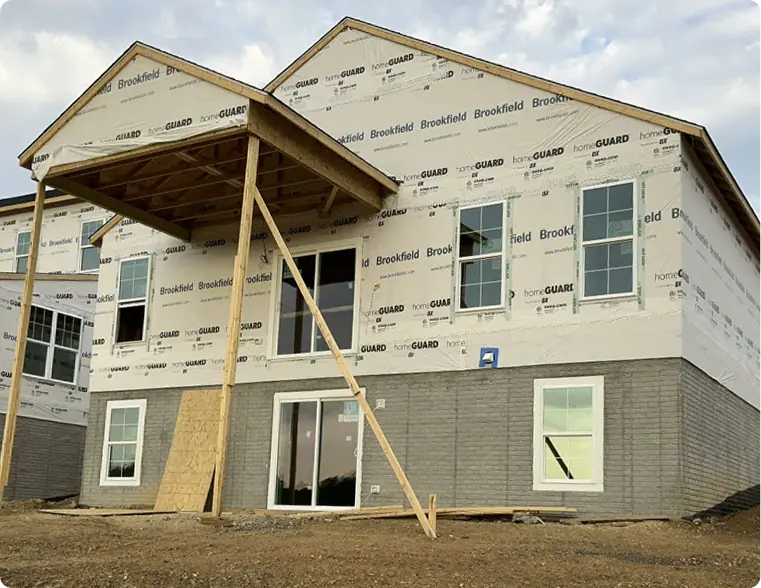
Opinions in this practice have been subjected to cross-examination across Circuit Court, General District Court, and arbitration. Retaining counsel can expect an expert who is prepared, precise under examination, and disciplined in maintaining the analytical record through every stage.
Expert reports are prepared to meet disclosure requirements under applicable court rules and to withstand rebuttal. Rebuttal analyses are available where opposing expert reports raise issues of methodology, data selection, or defect identification. Prior transcripts, reports, and disclosure materials are available for pre-retention review on request.
Matters across Virginia, Maryland, and West Virginia — Circuit Court, General District Court, and arbitration — retained by both plaintiff and defense counsel.
Retained by plaintiff counsel to evaluate property conditions following unauthorized tenant alterations. Site inspection documented the full scope of damage against the property’s pre-alteration condition. Resolved at settlement conference prior to trial.
Retained by defense counsel in a dispute involving exterior finish installation and contract scope compliance. As-built-to-plan comparison performed against approved drawings and contractual scope. Formally qualified as expert witness; provided trial testimony.
Retained by defense counsel in a multi-phase dispute involving deck, hardscape, and landscape installation defects, including independent plant inventory. Provided deposition testimony.
Retained by defense/counter-plaintiff counsel in a matter involving construction defect claims, unauthorized change orders, and asbestos abatement scope. Site inspection and integrated scope analysis performed across all issue areas. Resolved at pre-trial settlement conference.
Retained by plaintiff counsel in a matter involving porch ceiling and trim installation defects. Field inspection documented workmanship deficiencies against applicable standards of care.
Retained by plaintiff counsel in a matter involving vapor barrier, insulation, HVAC performance, and mold remediation scope. Field inspection performed across all affected systems; defect findings documented against applicable standards.
Each involved a property owner whose construction work did not meet the standard it should have — and who needed an independent expert to document what went wrong and stand behind the analysis under examination.
When construction projects raise difficult questions about performance, costs, or change orders, Biller & Associates delivers the independent, third-party analysis you need to document as-built conditions, quantify costs, and report findings.
Contact us below to schedule a consultation and receive a detailed evaluation of your project.